


You’re numb.
That’s why you are so busy.
That’s why you drink so much.
That’s why you invest your every waking moment in supporting everyone but yourself.
That’s the conversation I had with a woman recently.
She knew it was true.
Because she told me clearly, she was afraid of her own thoughts.
It’s not that she was on the verge of committing suicide. No not at all.
But her feelings were raw.
She was so full of emotions, frustrations and unsaid truths.
She was overwhelmed by the tsunami of responsibilities she was carrying.
She couldn’t consider journaling because there was too much to say.
She struggled to speak her truths to herself because of what it might mean.
She was scared of her own thoughts because the truth of who she was and who she had become was too much to face.
She was disconnected from herself.
She’d slowly got further and further away from who she is because she had put something, someone, anyone and anything first.
Some of that has been conditioned into her, some of it she leaned into because, hey, isn’t that what everyone does?
You take responsibility for what’s not working out.
You take responsibility for your parents, their challenges and their needs,
You take responsibility for the children, their schooling and their development.
You take responsibility for the household, the holidays, and the extras.
You take responsibility for the team, you pick up the slack, you stay late.
You take responsibility for the friendship group, the catch-ups and their problems.
You take responsibility for your partner’s needs and issues.
God forbid if you have any external community, because that’s another thing to take responsibility for. Whether it’s the ERG, the association or the networking group you are a part of.
You get more qualifications.
You start a side hustle.
You go for that stretch role.
Taking on more than is physically and mentally healthy, but you’ve got justifications for it. Those justifications sound valid until you start counting the cost.
Let’s be honest, there are plenty of people who will tell you how great you are for pushing through and that you are the example of the woman who can do it all.
That feels like validation. That feels like what success is supposed to be… doesn’t it?
But at what cost?
What you are doing is drowning out your own voice in favour of everyone else’s.
You’re drowning yourself in a sea of guilt-ridden doing.
You’re disconnecting from yourself to justify everyone else’s connecting.
Slowly but surely, like standing in quicksand, you are sinking, and no one is coming to save you… not even yourself.
I’ve seen it when I’ve delivered sessions and recommended journaling. The resistant recoiling isn’t because the suggestion is bad; it’s because it’s too scary to consider.
At a recent workshop in Croatia, I asked the audience to close their eyes, take a few deep breaths and sit in the silence, allowing themselves to hear their own voice. It was such an interesting experience.
One woman literally refused to close her eyes even though prompting was offered. I watched her – she couldn’t do it.
When we ended, after around just 2 minutes, I asked them how it was:
“difficult, frightening, not so bad, noisy”
Sitting with ourselves is challenging when we have been conditioned to be all things to everyone but ourselves. It’s a challenge when we have been taught to distrust our own thoughts and being.
So much of our value has been placed in doing.
We are lost without our corporate titles.
We struggle to sit in the silence of not being needed 24/7. We continue to squeeze more into our already packed day in order to justify our existence and our worth.
I told an audience that they are worthy just by virtue of being a human being, and got kickback from a fraction of those listening, saying that it’s a trope.
Can you imagine?
It’s a simple truth, but one to difficult to accept when performance has been tabled as the only prize of value.
It made me smile because it tells me more about them than they may realise. The resistance is real, because if I’m already worthy, does that then invalidate all of this doing I’ve got myself into?
And if so, what does that mean for me?
Can you imagine we are living this one life we have without connecting to our own lives! We do our damnedest to ensure that everyone else is getting the best of us and leave ourselves with less than scraps.
No wonder we feel disconnected from ourselves.
How could we be connected when we leave no room for ourselves in our time equation?
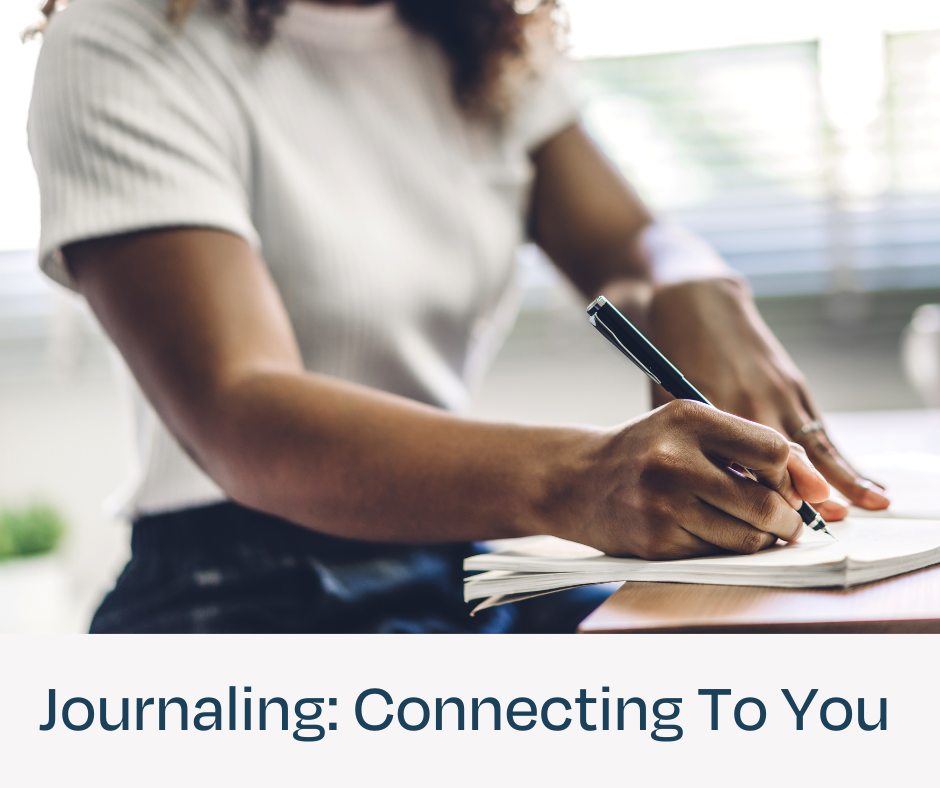
I vehemently advocate for journaling after 26 years of doing it (this November is my journaling anniversary) because it’s one of the best ways to connect to yourself and get to know who you are.
You can continue to run from yourself, and you may get further and further away, but like a dog with an expanding leash, you cannot detach from the owner of the leash. That owner is you.
Your job is to lovingly reconnect with yourself. To explore who you really are with grace, care and love.
That’s what’s missing.
I know it’s frightening because when you are out of the habit of connecting with yourself, it can feel impossible to pull yourself back to you.
Can you imagine just how much more impactful you could be, how you could reduce your cortisol and stress levels, how you could connect better with your team if you took the time out to get to know you?
If you are on the struggle bus with connecting, that’s where support comes in. Choosing you requires choosing to get the support you need.
Because whilst it’s initially frightening, reconnecting with yourself is the best thing you could ever do for you. Getting those swirling thoughts out of your head and organising them (or not) on paper will help you create space and remove the fear.
Connecting with yourself removes the numbness and replaces it with self-assurance.
Connecting with yourself helps you to recognise the boundaries you’ve broken that require putting back in place and holding.
Connecting with yourself is a radical act of self-love
Connecting with yourself gives you the unction to advocate for yourself.
Connecting with yourself gives you more emotional intelligence, helping you to manage your team better.
Connecting with yourself
Connecting with yourself is the reset that you have been aching for.
You don’t believe me?
I asked the analytical side of AI to give you some stats:
Journaling is basically a low-cost, side-effect-light mental health and performance intervention, and there’s a lot of data behind it.

Below are the main benefits, with stats from research (not just “it feels nice”).
1. Mental health: less anxiety, stress & depression
Clinical trials and meta-analyses show big shifts:
- A synthesis of 20 randomised controlled trials on journalling for PTSD, anxiety and depression found consistent symptom reduction compared with control conditions (standard care or neutral writing). fmch.bmj.com+1
- Across multiple clinical studies, regular journaling reduced symptoms of depression and anxiety by roughly 20–45%. reflection.app
- Expressive writing protocols (15–30 minutes, several sessions) led 85% of participants to report better mental health and better processing of difficult experiences. mindsera.com
- In one study, expressive writing reduced depression scores by about 30% over 8 weeks. reflection.app
- Positive-affect/“gratitude” journaling trials have shown:
- Around 25% increases in life satisfaction and up to 15% reductions in depression symptoms over 4–6 weeks. reflection.app+1
Mechanism (simplified):
Neuroimaging studies show that putting feelings into words activates the prefrontal cortex (planning, regulation) and dampens activity in the amygdala (threat system), which helps calm emotional reactivity and reduce anxiety. reflection.app+1
2. Cognitive benefits: focus, clarity & memory
Journaling doesn’t just make you feel better; it also sharpens thinking.
- In one analysis, 88% of regular journalers reported improved focus and mental clarity as a primary benefit (vs only 52% of non-journalers who expected that effect). mindsera.com
- A review of studies found journalling can boost cognitive clarity and task engagement by about 30%, with participants feeling more organised and mentally “tidy” after writing. mindsera.com
- Expressive writing tasks have been shown to increase working-memory capacity and attention during cognitive tasks by around 20–25%. mindsera.com+1
- About 59% of people who journal report improved memory, with research suggesting a 20–23% improvement in recall when information is written down versus only read or heard. mindsera.com
Practically, that translates into clearer thinking, less “mental clutter”, and more bandwidth for problem-solving and creativity.
3. Performance & goal achievement
Reflection on work and goals is particularly powerful.
- An analysis of over 50,000 workers found that keeping a work journal was associated with about 22.8% better performance, mainly through improved reflection, prioritisation and learning from daily experience. mindsera.com
- Studies on goal-setting show that people who write their goals down and review them (i.e., journal about them) are around 42% more likely to achieve those goals than those who don’t. mindsera.com
So, from a leadership or career perspective, journaling is effectively a structured reflection and strategy tool.
4. Physical health & stress biology
Expressive writing was originally studied as a health intervention, not a self-help fad.
- Classic Pennebaker-style studies where people wrote about traumatic or stressful events for 15 minutes over four days found:
- Fewer doctor visits over subsequent months
- Improved immune markers (e.g., stronger antibody response to vaccines, better indicators after viral infections) Cambridge University Press & Assessment+1
- Meta-analyses of expressive writing trials confirm broad improvements in physical health measures across multiple populations. Semel Institute+1
- One review summarising multiple clinical studies found regular journaling can reduce cortisol (the main stress hormone) by up to 23% in frequent practitioners. reflection.app
For older adults with ongoing medical issues, a randomised study showed that journaling reduced mental stress load and increased overall well-being compared with controls. evidencebasedliving.human.cornell.edu
5. Gratitude & wellbeing: mood, optimism & sleep
Gratitude journaling is one of the most studied subtypes.
- In a classic gratitude trial, people who regularly recorded things they were thankful for showed about a 25% increase in life satisfaction and improved mood compared with those who focused on hassles or neutral events. reflection.app+1
- A randomised controlled study of a two-week gratitude-journalling intervention (compared to controls) in young women found:
- Increases in hedonic well-being
- Better cardiovascular and neuroendocrine profiles
- Improved sleep quality KCL Pure
- A systematic review of 64 randomised trials involving gratitude practices (many using journalling) reported overall improvements in mental health, reduced anxiety and depression, and better mood. criticaldebateshsgj.scholasticahq.com
- In patients with advanced cancer, mindful gratitude journaling significantly improved quality of life and reduced psychological distress in a randomised controlled trial. spcare.bmj.com
So even brief gratitude-style entries (“three things I’m grateful for today”) can move the needle on mood and sleep.
The data doesn’t lie.
And before you turn this into another performative perfectionist writing task where you give yourself a hard time thinking that your handwriting, grammar, and syntax have to be top-notch, let me stop you.
The research also shows that the Quality of writing doesn’t matter — spelling, grammar, and style are irrelevant. It’s the “act of structured reflection and emotional processing” that drives the outcomes.
Just giving a go, raw, scruffy and honest is what’s going to make the difference.
How much journaling is enough?
Well, evidence-based parameters from multiple studies suggest the following format:
- Frequency: 3–4 times per week
- Duration: 15–20 minutes per session
- Length of intervention: at least 4–6 weeks for robust, lasting benefits
- Content:
- Emotional/expressive writing for processing stress, trauma, or difficult events.
- Gratitude journalling for mood, resilience, and sleep
- Goal/reflective journalling for focus, performance and learning

Let me be clear, whilst there are many prescriptive journals out there, and that may be a good starting point for you, it’s not necessary. Free writing is important; getting what’s in your brain and emotions out is far more impactful than following a script.
Say how you feel, where you are annoyed, who irritated you, who you love and why. What you feel about your situation, what you are grateful for, what makes you happy, and what makes you sad? Write your list of to-dos, examine them and ask yourself if you can offload them. Get mad at your family, or your partner or even your parents. Consider what’s swirling in your mind and write it down so that you can sleep in peace. Express gratitude, write your vision plan, visualise and dream, log your mood, plot your career. Explore your leadership performance, consider your team dynamics, complain about your boss or extol their virtues.
There is so much you can do in your journal; it’s your space to free up your mind and explore your thinking.
This is your opportunity to bet on yourself. So go get yourself a notebook – I love the Nuuna notebooks and the Uniball 1.0 Black Gel Impact pens – I also use a coloured pen and have a chrome gold pen that I use for headings and highlights. If you really want to get into it, check out Bullet Journalling on Pinterest
Find something that works for you. Allow yourself 10-15 minutes to clear your mind and get everything out of your head. Before bed and/or when you wake up in the morning are great times to journal.
Let me know how journaling has worked for you or if you really struggle with it in the comments, or email me at hello at magnificentlyyou dot com









Comments (2)
Great blog as always. And a good read and nudge to kick off 2026!
Great to hear from you Rochelle and Thank you!